Forgotten Romance: The Romanian Language
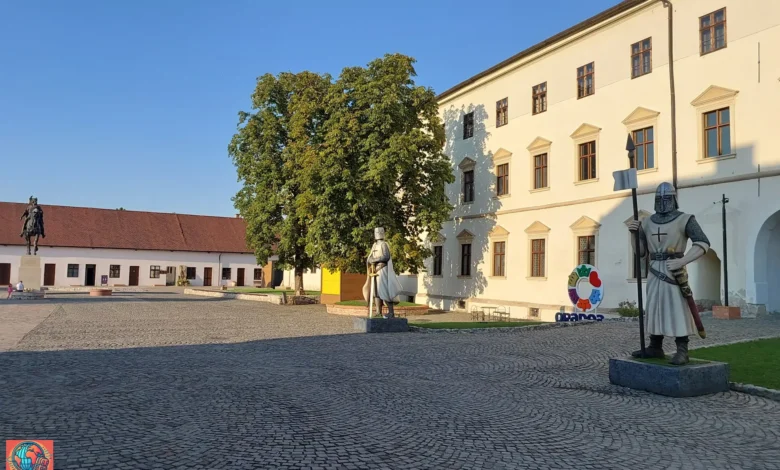
Romania has some of the most beautiful landscapes in the world. From snow-covered mountains, lush rolling hills, and evergreen forests. This place will be sure to take your breath away. The same goes for the Romanian language.
And, even though it is in Eastern Europe and surrounded by Russian-sounding Slavic languages, you will probably be surprised to hear that it has more in common with Italian or Spanish than, say, Russian or Bulgarian.
Where Does this Language Come From?
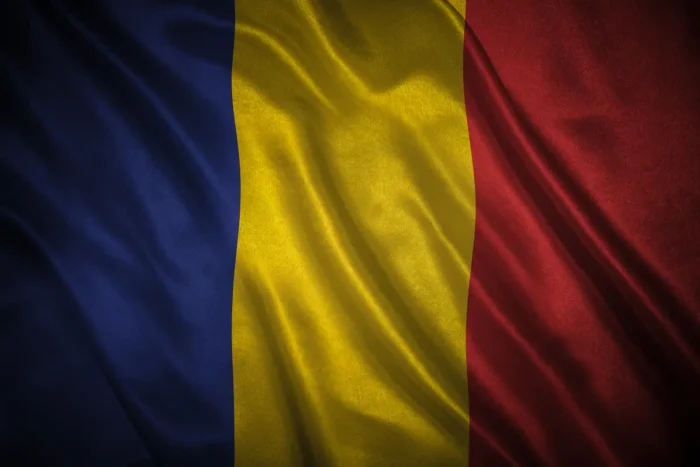
Romanian is one of five major Romance languages in the world. This makes it quite useful and also reasonably easy to learn (in comparison to languages such as Russian and German) for native English speakers.
Over 1.2 billion people speak one of these major tongues, which include Italian, French, Spanish, Portuguese, and Romanian. The language acts as the official dialect of Romania and Moldova, spoken by around 24 million people combined.
Originating from Vulgar Latin, it was brought to the region by Romans. After they left the area around 271-272AD the language stayed and transformed over time.
Because Romania is mostly surrounded by Slavic countries like Ukraine and Serbia, people naturally assume the language sounds like Russian. The truth is that Slavic influence accounts for roughly 10% to 15% of its current vocabulary. The vast majority of the language remains heavily rooted in its Romance origins.
At one point during the 1,800s, there was a massive effort to “Re-Latinize” the language. Linguists went through and stripped out many of the Slavic words that had infiltrated Romanian over the centuries.
Back then, Bucharest was called “Little Paris” and a huge chunk of Romanian high society was under heavy French influence. Naturally, this pushed the language even further toward its Latin roots.
What does all this mean for you?
Is Romanian Hard for English Speakers?
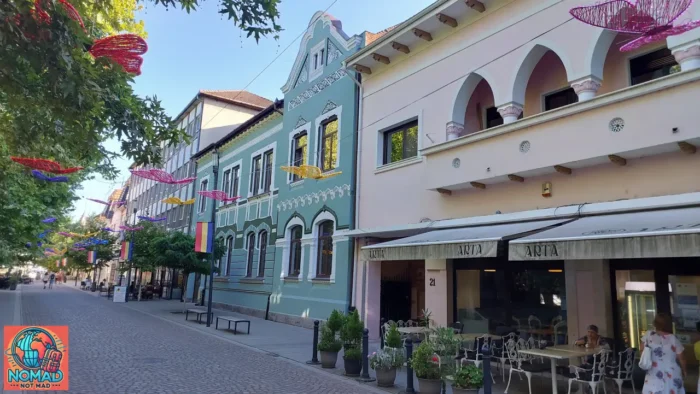
Well, for starters, it means you will have a much easier time learning it than a Cyrillic based language like Russian or Ukrainian. Since Romanian is derived from Latin, it uses a very similar alphabet to English.
- Although the letters Q, W, and Y are formally part of the Romanian alphabet they are mostly only used in foreign words.
- The letter K is rarely used, also
- Romanian also has a few additional letters: Ă, Â, Î, Ș and Ț. These all have their own unique pronunciation.
When you speak English as a first language, it’s fairly easy to pick up languages that at least use the same letters as you. The Romanian language is one of those.
However, Romanian grammar is not the easiest to learn. Words have genders, and they also pluralize with a vowel at the end of the word. This can make it more difficult to master than say, Spanish.
The Weird Grammar Rules You Should Know
One of the most bizarre and fascinating quirks of the Romanian language is the enclitic definite article.
In English or Spanish, the word for “the” comes before the noun. In Romanian, it attaches directly to the end of the word.
So “boy” is băiat, but “the boy” becomes băiatul. It messes with your head at first, but once you get the hang of it, it comes naturally.
If you want to go even more in-depth, I recommend reading about Romanian culture, too.
Pronunciation in the Romanian Language
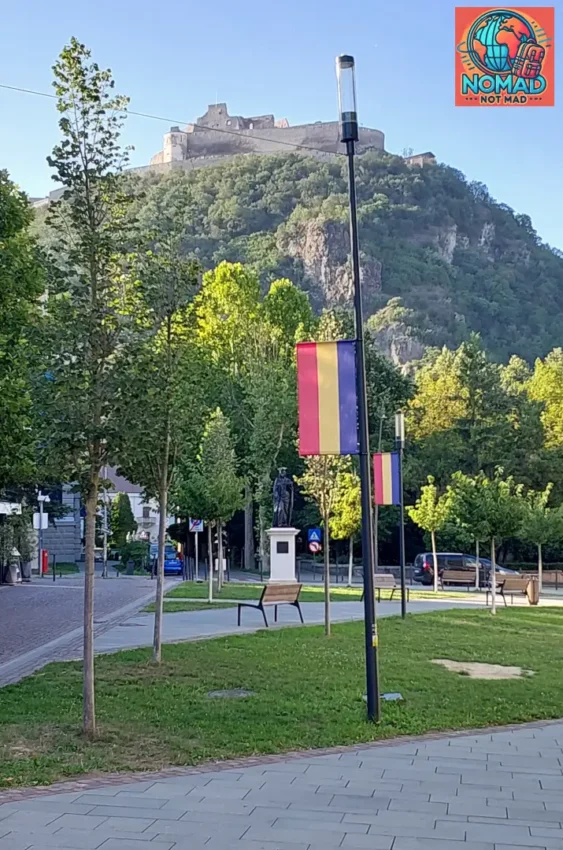
Let’s narrow down the pronunciation on Romanian. If I had to choose from what I’ve studied so far I would say that Romanian sounds like a combination of Italian and Spanish.
Their is a good amount of rolling “r” sounds and long “a” sounds. A fair amount of “cu”, pronounced “coo”, is also used.
Here is a comparison of some sayings in English, Romanian and a neighboring Romance Language to give you an idea of how close Romanian is to them.
Excuse me, how much is it?
Romanian: Mă scuzați, cât costă?
Italian: Mi scusi, quanto costa?Thank You
Romanian: Mersi (although most will say Mutumesc)
French: Merci
You can see with “thank you” just how close Romanian is to its neighboring Romance Languages. They are pronounced exactly the same and the only difference is in the spelling.
Being able to enunciate words in their proper way will greatly help you out if you end up in a sticky situation.
Romanian is a highly phonetic language. You read it exactly as it is written. Learn the phonetic rules for those special letters with diacritics and speak clearly.
Essential Romanian Phrases for Travelers
Here are a few greetings and short phrases you should know before you land in Romania to get the upper hand, at least when it comes to impressing the locals.
- Hello: Salut
- Thank you: Mulțumesc
- Please: Vă rog
- Goodbye: La revedere
- Yes / No: Da / Nu
Conclusion
I hope you learned some interesting things in today’s article about Romania’s language. It is an interesting language to learn and even though not extremely easy to become fluent in it, you don’t really have to if you only visit for a short while.
Most Romanians do speak English at least to a conversational degree, but they will all appreciate you taking the time to learn at least some basics. How are you, thank you and hello are some good things to learn if you really want to.
If you are coming from a Spanish, French, Italian, or Portuguese background then you should have no problem picking up Romanian. Conversely if you have aspirations to learn the other Romance languages then Romanian might be a good starting point.
Mulțumesc for reading.